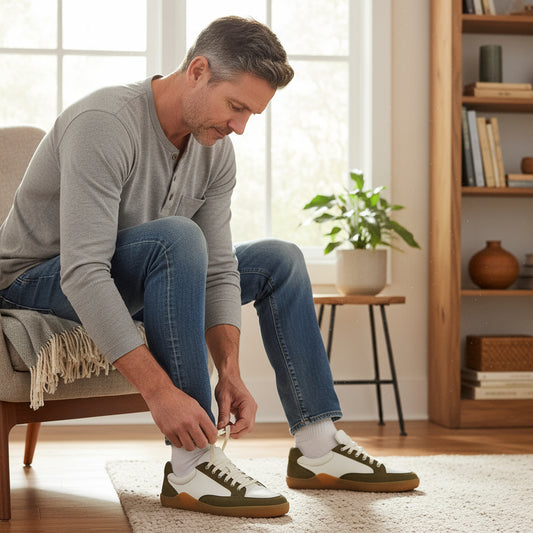

Barefoot Shoes: the Complete Guide
The barefoot shoe movement has grown from a niche curiosity to a legitimate footwear category, and for good reason. More people are discovering that conventional trainers, with their thick cushioning, elevated heels, and narrow toe boxes, might not be the answer to foot health they've been marketed as.
This comprehensive guide explores what barefoot shoes actually are, how they differ from traditional footwear, and whether they might be right for you. We'll cut through the marketing hype and common misconceptions to give you the information you need to make an informed decision.
What are Barefoot Shoes?
Barefoot shoes, also called minimalist footwear, are shoes designed to mimic the experience of walking barefoot whilst protecting your feet from hazards like glass, sharp stones, and extreme temperatures. The philosophy is straightforward: our feet evolved over millions of years without cushioned trainers, and perhaps we've been overthinking footwear all along.
Think of it this way: when you wear traditional trainers, your foot is cocooned in padding, elevated heels, and rigid structures that restrict natural movement. Barefoot shoes strip all that away, allowing your feet to function as they were designed to.
The Core Characteristics
What makes a shoe "barefoot"? There are five defining features that separate these from conventional footwear:
Zero drop or nearly zero drop, means the heel and forefoot sit at the same height. Traditional trainers typically have a 10-12mm elevation at the heel, which shifts your posture forward and shortens your calf muscles over time. With zero drop, your body maintains its natural alignment.
Thin, flexible soles are perhaps the most noticeable difference. Most barefoot shoes have soles between 3-10mm thick, compared to the chunky 20-30mm you'll find on standard running shoes. This thinness allows you to feel the ground beneath you, which sounds uncomfortable but actually helps your feet respond to terrain naturally.
Wide toe boxes give your toes room to spread and grip the ground. If you've ever looked at a baby's foot, you'll notice their toes fan out naturally. Years of wearing pointed shoes compress our toes together, which can lead to bunions, hammertoes, and reduced balance. Barefoot shoes restore that natural toe splay.
Lightweight construction means these shoes typically weigh under 200 grams per shoe. You barely notice them on your feet, which reduces the energy cost of every step you take.
Flexibility throughout the sole allows your foot to bend, twist, and adapt to surfaces naturally. Try this test: pick up a conventional trainer and attempt to fold it in half. Now try the same with a barefoot shoe. The difference is remarkable.
Why Barefoot Shoes Matter
The case for barefoot shoes isn't just anecdotal. Research into biomechanics has revealed some fascinating insights about how our feet actually work.
Your feet contain 26 bones, 33 joints, and over 100 muscles, tendons, and ligaments. That's a quarter of all the bones in your entire body, packed into your feet. This complex structure evolved to be incredibly capable, yet we've spent the last century wrapping it in increasingly restrictive footwear.
When you walk in traditional cushioned shoes, your heel typically strikes the ground first with significant impact. Your foot doesn't need to work particularly hard because the shoe does the work. Over time, the muscles in your feet weaken, your arches may collapse, and your natural gait pattern deteriorates.
Barefoot shoes encourage a more natural gait. Most people who transition find themselves landing more on their midfoot or forefoot, which reduces impact forces and engages the foot's natural shock absorption system. Your arches flex and rebound with each step, strengthening over time rather than relying on artificial support.
The arch support debate is particularly interesting, because it contradicts conventional wisdom. We've been told for years that flat feet need support, yet studies on populations who've never worn shoes show virtually no incidence of foot problems despite many having "flat" feet by Western medical standards.
Barefoot Shoes vs Traditional Trainers
The differences go far beyond just thickness and weight. Let's break down what really separates these two approaches to footwear.
-
Stack height and cushioning: Traditional running shoes often boast about their cushioning technology - air pockets, gel inserts, foam compounds. A typical running trainer might have 25-35mm of material under your heel.
Barefoot shoes typically max out at 10mm, with many closer to 5mm. This isn't about one being objectively better; it's about different philosophies. Conventional shoes prioritise comfort and impact absorption. Barefoot shoes prioritise ground feel and natural movement.
-
Motion control features: Many traditional trainers include medial posts, stability shanks, and other features designed to control how your foot moves. The assumption is that your foot needs guidance and correction. Barefoot shoes operate on the opposite premise, that your foot is perfectly capable of controlling itself if given the chance.
-
Toe spring is something most people never notice. Pick up a conventional trainer and look at it from the side. See how the toe curves upward? That's toe spring, and it's in nearly every shoe you own. The problem is, it prevents your toes from properly engaging with the ground during push-off. Barefoot shoes have minimal to no toe spring, allowing your toes to grip and push naturally.
-
Weight differences are substantial. Daily barefoot shoes weigh 168 grams each. The regular running trainers? 312 grams. That nearly 150-gram difference per foot adds up over thousands of steps. There's research suggesting that every 100 grams on your feet has the same energy cost as 1 kilogram on your back.
What are Barefoot Shoes good for?
Most people assume these would be niche products for running enthusiasts and hippies. Turns out, barefoot shoes excel in numerous situations.
Everyday wear is where most people start, and it makes perfect sense. If you're walking around an office, running errands, or doing light activities, barefoot shoes let you strengthen your feet whilst going about your day. You may wear everywhere, from client meetings to weddings (yes, there are dress barefoot shoes).
Running and athletics is contentious territory. Some runners swear by barefoot shoes and credit them with eliminating injury. Others tried them briefly, got hurt, and went back to traditional trainers. The truth is nuanced. Barefoot running requires significant adaptation in both strength and technique. Rush the transition and you'll likely injure yourself. Do it properly and many runners find they can handle higher mileage with fewer injuries.
Gym training and lifting benefits enormously from barefoot shoes. When you're squatting or deadlifting, that cushioned heel on traditional trainers creates an unstable surface and changes your mechanics. Barefoot shoes provide a stable, flat platform that improves your connection to the ground.
Hiking might seem counterintuitive, surely you need ankle support and cushioning on trails? Yet barefoot hiking boots have gained a devoted following. The improved ground feel helps you place your feet more precisely on technical terrain. Your ankles get stronger rather than relying on the boot for stability. I've hiked hundreds of miles in barefoot shoes across everything from maintained trails to rocky scrambles.
Children's development is perhaps where barefoot shoes make the most sense. Kids' feet are still developing, and research consistently shows that barefoot or minimalist footwear supports healthier foot development. Paediatricians increasingly recommend against rigid, supportive children's shoes.
Common myths and misconceptions
After years in this space, we’ve heard every objection and misconception imaginable. Let's address the most persistent ones.
"You need arch support" is perhaps the biggest myth. The logic seems sound, if your arches are falling, prop them up. But arches are dynamic structures meant to flex and rebound. Artificial support prevents this movement, potentially weakening the very structures you're trying to protect. I had "flat feet" according to multiple podiatrists. They sold me orthotics. My feet got worse. Within six months of barefoot shoes, my arches became visibly higher and my foot pain disappeared.
"Barefoot shoes cause injuries" is partially true but misses context. Yes, people get injured transitioning to barefoot shoes. But this typically happens because they do too much, too soon. Your feet have potentially spent decades in conventional footwear. The muscles have atrophied, your gait pattern has adapted, and your tissues have become accustomed to artificial support. Suddenly removing all that and running 10 kilometres is asking for trouble. The shoes aren't the problem; unrealistic expectations are.
"They're only for people with perfect feet" gets the causation backwards. Very few people have "perfect feet" by the time they're adults. Decades of restrictive footwear have seen to that. Barefoot shoes don't require perfect feet; they're a tool to help improve foot health and function over time.
"You can't run long distances in them" has been thoroughly debunked. Ultramarathon runners regularly complete 100+ mile races in barefoot shoes. The Tarahumara people, featured in "Born to Run," run extraordinary distances in minimal sandals. It's absolutely possible; it just requires proper adaptation.
"They're uncomfortable" is subjective and often temporary. Yes, there's an adjustment period. Your feet might feel fatigued. You'll notice surfaces you never thought about before. But most people who persist through the transition period find barefoot shoes become more comfortable than conventional footwear. I genuinely find cushioned shoes uncomfortable now, they feel unstable and disconnected.
Who should consider Barefoot Shoes?
Barefoot shoes are for everyone. Certain people will benefit more than others, and some situations require careful consideration.
Ideal candidates include people with chronic foot pain that hasn't responded to conventional treatments, anyone interested in improving foot strength and function, runners looking to refine their form, and people who spend lots of time standing or walking. If you're generally healthy and active, barefoot shoes can be an excellent choice.
People who should be cautious include those with severe foot deformities, significant neuropathy (reduced sensation in the feet), and anyone with conditions affecting healing, like uncontrolled diabetes. This doesn't mean barefoot shoes are impossible, but you'll need professional guidance and extra care during transition.
Special considerations for northern European countries: our weather presents unique challenges. Rain, cold, and muddy conditions mean you'll need to think carefully about barefoot shoe selection. Fortunately, the market has evolved considerably. There are now waterproof barefoot boots, thermal winter options, and designs with slightly thicker soles that still maintain barefoot principles whilst providing more protection from cold ground.
The key is honest self-assessment. Are you willing to invest time in a proper transition? Can you resist the urge to do too much immediately? Do you have the patience to let your feet adapt over months rather than weeks?
Making the Transition
This is where most people go wrong, so pay attention. The transition to barefoot shoes requires patience and intentionality.
-
Start slowly. We recommend wearing barefoot shoes for just 30-60 minutes daily for the first week, gradually increasing by 15-30 minutes each week. Use them for low-impact activities initially, walking around the house, short errands, standing work tasks.
-
Listen to your body. Some muscle fatigue in your feet and calves is normal and expected. Sharp pain, joint discomfort, or pain that persists beyond the activity is a warning sign to back off.
-
Strengthen deliberately. Simple exercises help accelerate adaptation. Toe spreading, calf raises, picking up objects with your toes, and balance work all support the transition.
-
Consider your surfaces. Starting on grass or smooth indoor surfaces is gentler than beginning on concrete or rough terrain. As your feet strengthen, you can progress to more challenging surfaces.
-
Expect setbacks. The goal is gradual, sustainable adaptation, not rapid transformation. Most people need 3-6 months to fully adapt to barefoot shoes for walking and daily activities. Running adaptation often takes 6-12 months. This isn't a quick fix; it's a long-term investment in foot health.