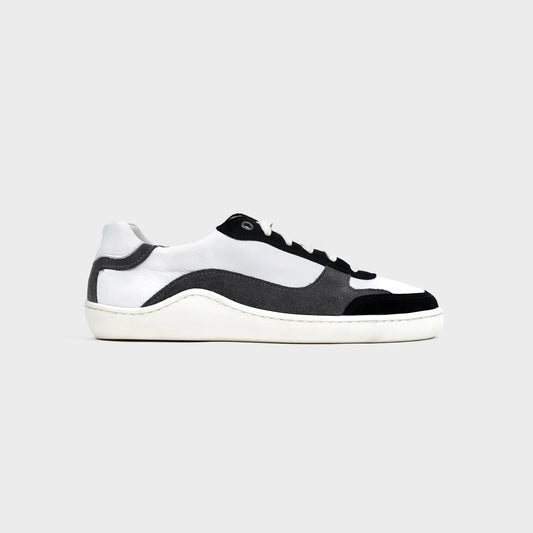

How Long Does It Take to Adapt to Barefoot Shoes?
Adapting to barefoot shoes takes weeks, not days. Here's a realistic timeline, what to expect at each stage, and how to avoid the most common transition mistakes.
Updated: 01 September, 2026

There's no single number that applies to everyone, but there is a realistic range: most people need somewhere between four and twelve weeks to feel fully comfortable in barefoot shoes, with the first two weeks being the most noticeable adjustment. How long it takes for you depends on where your feet are starting from, and how much you ask of them early on.
The most common mistake isn't choosing the wrong shoe. It's expecting the adjustment to happen in a weekend.
Why Adaptation Takes Time in the First Place
Feet that have spent years in conventional, elevated-heel, heavily cushioned shoes have adapted to that environment. Calf muscles and the Achilles tendon have shortened slightly to accommodate a raised heel. Muscles in the foot itself, the small stabilisers that barefoot shoes rely on, have had less work to do because cushioning and arch support were doing some of that job.
None of this is damage. It's adaptation, in the other direction, and it took years to happen. Reversing it, or more accurately, restoring the foot's natural range and strength, takes weeks rather than years, but it isn't instant either.
A Realistic Timeline
Days 1 to 3. This is usually the most noticeable stage. Calves and arches often feel tired or mildly sore after wearing barefoot shoes for a few hours, similar to the feeling after using a muscle group that hasn't been worked in a while. This is normal. Sharp pain, swelling, or discomfort that doesn't ease with rest is not, and is worth paying attention to.
Week 1 to 2. Soreness typically starts to ease as the foot and calf muscles begin adjusting to the reduced heel elevation and increased ground feedback. Many people find short, everyday use, an errand, part of a commute, works better here than long, continuous wear.
Week 3 to 6. This is usually when barefoot shoes start to feel less like something to adjust to and more like ordinary footwear. Full days of wear tend to become comfortable, and the earlier awareness of the ground and sole starts to feel familiar rather than unusual.
Week 6 to 12. For most people, by this point the transition is largely complete. Some, particularly those coming from many years in highly cushioned or elevated-heel shoes, or with a more sedentary daily routine, may need longer. There's no penalty for taking more time.
What Speeds Up or Slows Down Adaptation
-
Starting gradually helps. Wearing barefoot shoes for a few hours a day in the first week, rather than immediately replacing every other pair, gives muscles time to adjust without overloading them.
-
Previous footwear habits matter. Someone coming from flat, flexible trainers usually adapts faster than someone coming from years in structured, elevated-heel dress shoes or heavily cushioned running shoes.
-
Activity level plays a role. Feet that are already active and mobile tend to adjust faster than feet that spend most of the day in one position.
-
Rushing slows things down. Pushing through significant discomfort in the first week is one of the more common reasons people abandon the transition altogether, not because the shoes were wrong, but because the pace was.
When to Slow Down
Mild tiredness in the calves or arches during the first couple of weeks is a normal part of adaptation. Sharp or localised pain, pain that worsens rather than eases with rest, or swelling is not, and is a signal to slow down, spend less time in the shoes for a few days, and consult a healthcare professional if it persists. This article describes a general transition pattern, not medical guidance for a specific injury or condition.
Does a Podopostural Insole Change the Timeline?
Not dramatically, but it can make the process more comfortable. A podopostural insole is shaped to support the hallux's natural role as the guide of the step from day one, rather than leaving the foot to work out that guidance entirely on its own. It doesn't skip the adaptation period, muscles still need time to build strength and range, but many people find the early days feel more supported than in a completely flat, neutral barefoot insole.
Choosing between a 0mm and 4mm drop also matters here. For most people transitioning from conventional footwear, a 4mm drop tends to feel like a gentler entry point than jumping straight to zero, without leaving the barefoot range.
The Bottom Line
Four to twelve weeks is a realistic, honest range, not a guarantee. Some people adapt faster, some need more time, and both are normal. What matters more than hitting a specific number of weeks is listening to what your feet are telling you along the way, and giving the process the time it actually needs rather than the time you'd prefer it to take.
Frequently Asked Questions about barefoot adaptation
Is it normal for my feet to hurt when I first start wearing barefoot shoes?
Mild tiredness or soreness in the calves and arches during the first couple of weeks is common, similar to using a muscle group after time off. Sharp pain, swelling, or discomfort that doesn't ease with rest isn't normal and is worth having checked by a healthcare professional.
Can I wear barefoot shoes all day right from the start?
It's generally better not to. Starting with a few hours a day and gradually increasing wear time gives muscles time to adjust without overloading them in the first week.
Does a 4mm drop adapt faster than zero drop?
For many people coming from conventional footwear, yes, a 4mm drop tends to feel like a gentler starting point than an immediate jump to zero, though both remain well within the barefoot range.
How do I know if I'm progressing too fast?
Persistent or worsening pain, rather than mild tiredness that eases with rest, is usually the clearest sign. If that happens, reducing wear time for a few days and easing back in gradually is generally more effective than pushing through.
Start your transition with the right drop for you
→ Explore Bareo Pure
→ Explore Bareo Evolved