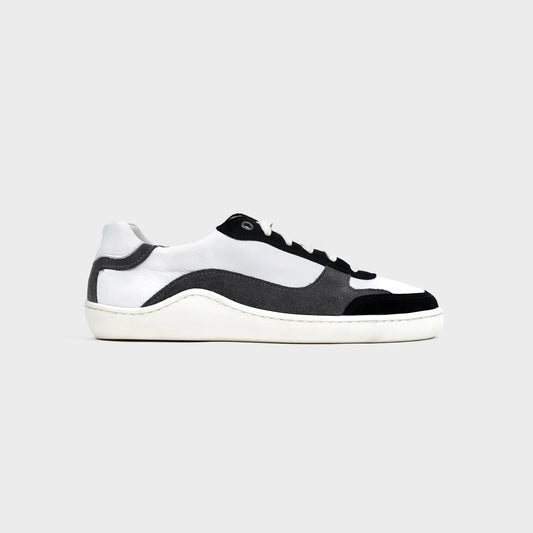

Who shouldn't wear barefoot shoes?
Barefoot shoes aren't the right choice for everyone, or at least not without a conversation first. Here's when it's worth checking with a healthcare professional.
Updated: 08 September, 2026

Most writing about barefoot footwear focuses on who benefits from it. That makes sense, most people do. But it's worth saying just as clearly who this isn't the right choice for, or at least not without talking to a healthcare professional first.
In most cases where someone feels discomfort with barefoot shoes, the barefoot itself isn't the problem. It's the wrong type of shoe, chosen too early, without gradual adaptation, or without guidance when there's an underlying condition that calls for it. But there's a set of situations where that distinction isn't enough, and the right move is genuinely to talk to a professional before moving forward.
The body is adapting, not failing
When someone feels discomfort in the first few days with barefoot shoes, it's easy to assume the shoe is the problem. In most cases it's the opposite. The body was used to a cushioned, rigid shoe with an elevated heel. When that compensation disappears, muscles, tendons, and joints start working differently, and that takes an adjustment period. It isn't a sign that something is wrong. It's a sign the body is relearning.
That's exactly why most of what follows isn't a ban, it's a request for more care and guidance.
Conditions worth discussing with a professional first
- Peripheral neuropathy, including diabetes-related neuropathy. When sensation in the foot is reduced, the information barefoot footwear relies on transmitting, ground feedback, pressure awareness, arrives incompletely or not at all. This can make it harder to notice injuries or problem pressure points early. Here, the caution isn't about a slower pace, it's about assessment by a healthcare professional first.
- Recent foot, ankle, or knee surgery. Post-surgical recovery has specific protection and support requirements that vary case by case. The decision about when and how to reintroduce minimalist footwear should come from whoever oversaw the surgery.
- Structural deformities requiring a prescribed orthopaedic support. When there's an active medical prescription for arch support, an orthotic insole, or another specific corrective device, that prescription should be respected and discussed with whoever issued it before any footwear change.
- Plantar fasciitis during an acute flare-up. During an acute episode of intense pain, the immediate goal is usually reducing load on the affected area, not introducing a shoe that increases sensory feedback. After the acute phase, and with professional guidance, many people are eventually able to make the transition.
- Peripheral vascular disease or diagnosed poor circulation. These conditions require individualised assessment of any change to usual footwear, given the potential impact on protection and blood flow to the extremities.
- Children with specific, already-identified orthopaedic needs. The Bareo Grow line was designed for natural foot development in children without those needs. If a child is already being followed by an orthopaedist or podiatrist for a specific condition, that professional guidance should take precedence.
Situations where care is mainly about pace
Unlike the conditions above, these aren't contraindications, they're cases where adaptation tends to need more time and attention, without that meaning risk:
Decades in conventional footwear. Years of an elevated heel and cushioning mean the muscles in the foot, the toes, and the Achilles tendon have had less work to do. Expecting immediate adaptation isn't realistic, but it also isn't cause for concern, it's simply a matter of giving the process time. You can check the complete adaptation timeline to understand what to expect at each stage.
Wanting to switch overnight into intense activity. Buying barefoot shoes and immediately using them for long walks, intense training, running, or full days on your feet is one of the most common mistakes. Even physically active people without any condition need to let their feet adapt gradually.
Who typically adapts well
In most cases, adaptation tends to be simpler for people who walk regularly, maintain good ankle mobility, don't have persistent pain, transition progressively, and pay attention to what their body is telling them along the way. For this group, which is most people, the transition follows the normal gradual adaptation path, without needing special clinical oversight.
What this doesn't mean
None of the clinical conditions listed necessarily means "never." Many are managed over time, and transitioning to barefoot shoes can become appropriate later, with proper guidance. The point of this list isn't to discourage, it's to replace "try it and see" with "talk to someone who knows your situation first," in the cases where that genuinely matters.
Warning signs during transition, even without a pre-existing condition
Even without any of the conditions above, it's worth paying attention during the adaptation period. Sharp or localised pain that worsens rather than improves with rest, or swelling, aren't normal and are reason to stop and see a professional. Mild muscle tiredness in the first few weeks, on the other hand, is an expected part of the process.
The final decision is always clinical, not marketing
No article, including this one, replaces an individual assessment. What Bareo can offer is footwear designed around podopostural principles, in the spirit of the Evolved Barefoot concept, built to guide movement rather than just free the foot. But the decision about whether, when, and how to make this transition, in the situations described above, always belongs to whoever is overseeing that person's health closely.
Frequently asked questions about who shouldn't wear barefoot shoes?
-
Can people with diabetes wear barefoot shoes?
It depends on the individual state of the condition, particularly the presence or absence of peripheral neuropathy. It's essential to speak with a healthcare professional before making this transition. -
After foot surgery, how long should I wait before trying barefoot shoes?
There's no universal timeline, it depends on the type of surgery and individual recovery. That decision should be made together with whoever oversaw the surgery. -
Can children always wear barefoot shoes?
For most children without specific orthopaedic needs, yes, and it's often considered beneficial for natural foot development. Children already being followed by a professional for a specific condition should follow that guidance. -
If I have plantar fasciitis, should I avoid barefoot shoes forever?
Not necessarily. During an acute flare-up, it's generally not the right time. After that phase, with professional guidance, many people successfully make the transition.
Discover the Bareo Evolved line → Explore the collection