
What Makes a Shoe Podopostural?
Podopostural goes beyond cushioning or support. Discover what defines a podopostural insole, how it differs from orthotics and orthopaedic shoes, and why it's central to Evolved Barefoot design.
Updated: 18 August, 2026

The word sounds technical, and in a sense it is. But the idea behind it is simple: most insoles are built to do less. A podopostural insole is built to do one specific thing well, support the foot's role as the starting point of posture, rather than staying neutral or adding cushioning on top of it.
It's a term that shows up increasingly often in barefoot and minimalist footwear conversations, and it's worth understanding properly, because it describes something genuinely different from an orthotic, an orthopaedic shoe, and a standard flat barefoot insole.
Podopostural, Broken Down
The word combines two ideas: podo, relating to the foot, and postural, relating to the body's alignment and posture. Put together, podopostural design treats the foot not as an isolated part of the body that just needs protecting, but as the base the rest of the body's alignment is built on.
This isn't a new idea in physiotherapy or podiatry, where the foot's role in overall posture has been studied for decades. What's newer is applying that thinking directly into the design of an everyday shoe, rather than treating it as something that only belongs in a clinical insert prescribed after an injury.
What a Podopostural Insole Is Not
It helps to start with what it isn't, because the term gets confused with a few very different things.
It's not a cushioned insole. Cushioning absorbs impact by adding material between the foot and the ground. A podopostural insole does the opposite: it stays thin and close to the ground, preserving the proprioceptive feedback that barefoot design is built around, while still shaping how the foot sits.
It's not a corrective orthotic. A conventional orthotic is typically prescribed to correct a specific issue, overpronation, a leg length difference, arch collapse, and works by substituting for something the foot isn't doing on its own. A podopostural insole isn't designed to correct or substitute. It's designed to guide a foot that's already capable, giving it a reference point rather than taking over its job.
It's not an orthopaedic shoe. Orthopaedic footwear is a broader medical category, usually built around a diagnosed condition and often prioritising structure and containment over flexibility. Podopostural design starts from the opposite direction: it keeps the sole thin and flexible and the foot free to move, and adds guidance rather than structure.
The Hallux as the Reference Point
At the centre of podopostural design is the hallux, the big toe. In natural gait, the hallux plays a specific role: it acts as the guide the rest of the foot follows through stance and push-off, the reference point for balance and direction as weight shifts forward through a step.
Conventional shoes routinely compromise this. A narrow toe box or an upturned, elevated tip compresses the hallux and pulls it out of the position it needs to do its job properly, forcing the rest of the foot to compensate. A flat, neutral barefoot insole doesn't reintroduce that problem, but it doesn't actively support the hallux's function either. It simply leaves the foot alone.
A podopostural insole is shaped specifically around this. Instead of a flat surface, the area beneath the hallux is contoured to support its natural position and let it continue acting as a guide rather than just occupying space in a wide toe box. It provides guidance. Not dependency.
Why This Matters Beyond the Foot
The reason podopostural design gets discussed in terms of posture rather than just foot comfort is that the foot's alignment doesn't stay isolated. The ankle, knee, hip, and spine all respond, over time, to how weight is distributed and guided at ground level with every step. This is the same underlying logic that makes shoe drop relevant to posture, and podopostural design approaches it from the insole rather than the sole. If you haven't already, it's worth reading how drop and podopostural design work together in the Evolved Barefoot System.
This doesn't mean a podopostural insole replaces physiotherapy or corrects existing postural issues on its own. It means the insole is designed to support natural alignment from the ground up rather than ignore it, which is a meaningfully different design goal from cushioning, correction, or orthopaedic containment.
Podopostural vs Standard Barefoot Insole
|
Standard Barefoot Insole |
Podopostural Insole |
|
|
Surface |
Flat, neutral |
Contoured around the hallux |
|
Goal |
Stay out of the way |
Guide the step |
|
Ground feel |
Preserved |
Preserved |
|
Function |
Passive |
Active guidance |
|
Best paired with |
Any barefoot sole |
Anatomical toe box, minimal drop sole |
Both approaches respect the Evolved barefoot principle of removing artificial interference. The difference is what happens after that interference is removed. A standard barefoot insole leaves the foot to figure things out on its own. A podopostural insole gives it a starting reference.
How It Fits Into Evolved Barefoot
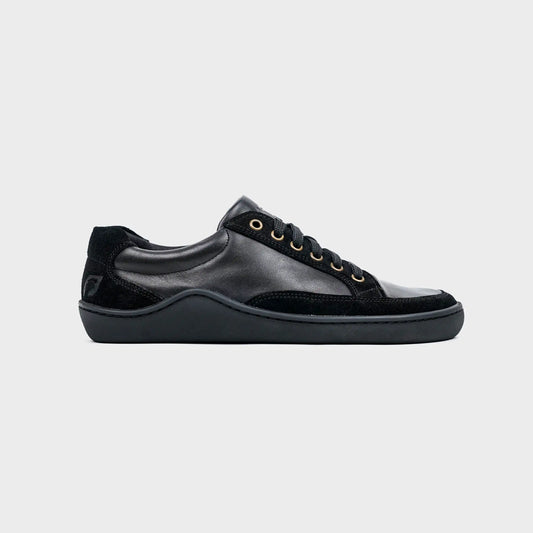
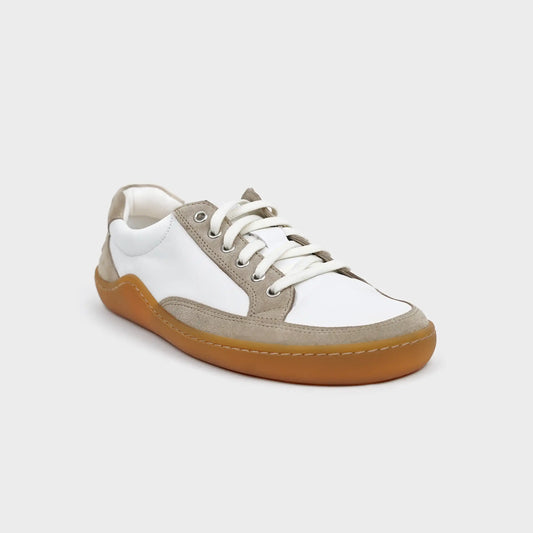
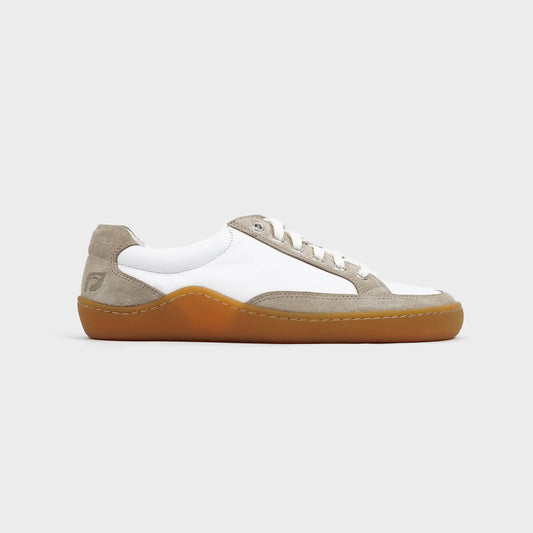
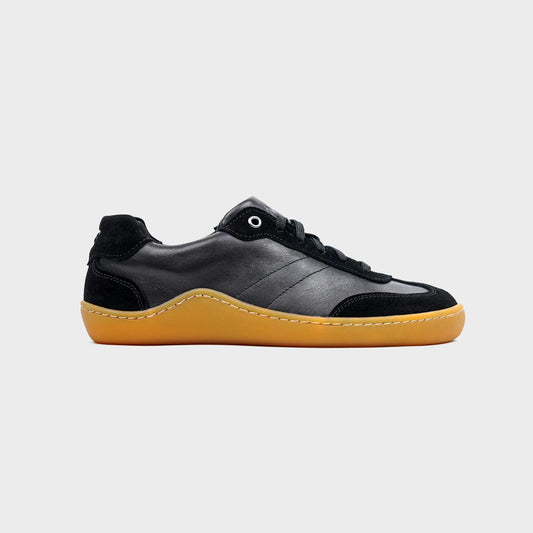
A podopostural insole on its own isn't the whole picture. It works together with the other two pillars of Evolved Barefoot design: an anatomical shape wide enough for the hallux to sit and move naturally, and a sole with a drop calibrated to work with the insole rather than against it. Materials matter here too. On Bareo shoes, the insole and upper are built with premium natural materials and worked entirely in Portugal, which keeps the contouring precise and durable through daily use rather than flattening out after a few months.
This is also why podopostural design is present across both Bareo Pure and Bareo Evolved, regardless of drop. The insole's job doesn't change based on how much incline sits beneath it. Whether the sole is at 0mm or 4mm, the hallux still needs the same support to do its job as the guide of the step.
Frequently Asked Questions
-
Is a podopostural insole the same as an orthotic?
No. An orthotic is typically prescribed to correct a specific biomechanical issue and often substitutes for a function the foot isn't performing on its own. A podopostural insole guides a foot that's already capable, without correcting or replacing its natural movement.
-
Is a podopostural shoe the same as an orthopaedic shoe?
No. Orthopaedic footwear is generally built around a diagnosed medical condition, prioritising structure and containment. Podopostural design keeps the sole thin and flexible and the foot free to move, adding guidance rather than rigid support.
-
Does a podopostural insole reduce ground feel?
No. It stays thin and close to the ground like a standard barefoot insole. The contouring around the hallux doesn't add cushioning or thickness, it shapes the surface to support natural positioning.
-
Is podopostural design only relevant for people with foot problems?
No. It's built into the shoe for everyday use, regardless of whether someone has an existing foot or posture issue. The goal is supporting natural alignment, not correcting a diagnosed condition.
-
Do both Bareo Pure and Bareo Evolved have podopostural insoles?
Yes. Both lines share the same podopostural insole design. The difference between them is the drop, 0mm for Pure and 4mm for Evolved, not the insole.
-
Can a podopostural insole replace physiotherapy?
No. It's a design feature built into everyday footwear, not a treatment. Anyone with a diagnosed postural or foot condition should continue following guidance from their physiotherapist or podiatrist.
See the podopostural insole in every pair
→ Explore Bareo Pure