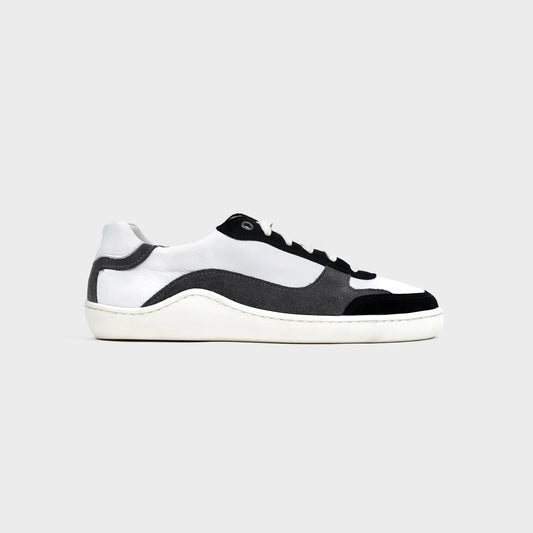

Beyond Zero Drop: Is Zero Really Better?
Zero drop isn't automatically the best option for every foot. Discover when a 0mm drop outperforms a 4mm drop, and why Bareo built both into the Evolved Barefoot System.
Updated: 11 August, 2026

Zero drop has become shorthand for "real" barefoot. If a shoe isn't zero, the assumption goes, it can't be truly barefoot at all. That assumption deserves a closer look, because it treats one specification as if it were the whole philosophy, when in practice it's a real and valuable design choice, one that works better for some people and some situations than others.
The more useful question isn't whether zero drop is better. It's better for whom, and for what. It's a question worth answering properly, because at Bareo, it's the reason two different drops exist in the same range instead of one.
What Zero Drop Actually Does
Zero drop means the heel and forefoot sit at exactly the same height. Conventional footwear typically raises the heel 8 to 12mm, a lift that changes posture throughout the body over time, shortening the Achilles tendon and shifting load onto the knees and lower back.
Research on footwear drop and lower-body biomechanics has examined exactly this kind of effect, comparing how the body adapts to different heel-to-toe drops over time. Zero drop removes that artificial elevation entirely, letting the foot return to something closer to its natural resting angle.
For barefoot purists, for anyone training on natural terrain, or for feet that have already fully adapted, zero drop is often exactly the right tool. It's a genuine and important part of how barefoot movement works, which is why it's built into Bareo Pure rather than treated as something the brand argues against.
Where the "Zero Is Always Best" Assumption Breaks Down
Two zero drop shoes can behave completely differently. One might pair that flat platform with a narrow toe box and a stiff sole. Another might combine it with genuine flexibility and room for the toes to spread. The drop number alone tells you nothing about either of those things, and movement itself depends on far more than a single measurement: foot shape, proprioception, muscle activation, balance, mobility, and whatever a person's feet have spent the last decade doing inside conventional shoes.
Reducing the entire conversation to "0mm versus anything else" skips over most of what actually determines how a shoe performs. It also assumes every foot is starting from the same place, which they aren't. Someone stepping out of stiff, elevated-heel shoes for the first time can find an abrupt jump to zero uncomfortable, sometimes enough to abandon the transition altogether before the real benefits show up. That's a real, common starting point, not an edge case, and it's exactly what Bareo Evolved was built to address.
Two Drops, Not One Compromise
Rather than pick a single drop and defend it, the Evolved Barefoot System is built around offering the right one for where a person's feet actually are.
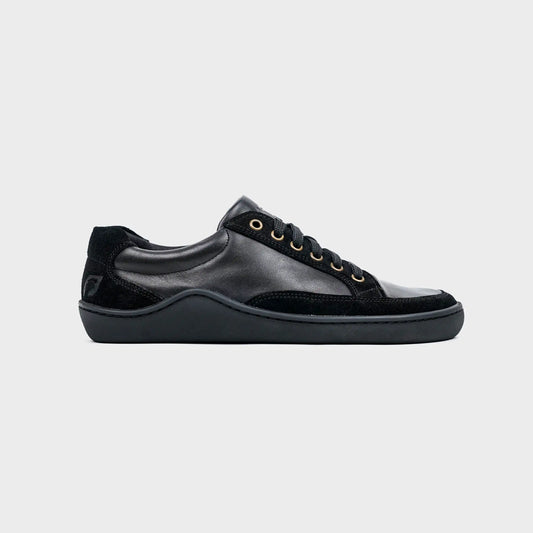
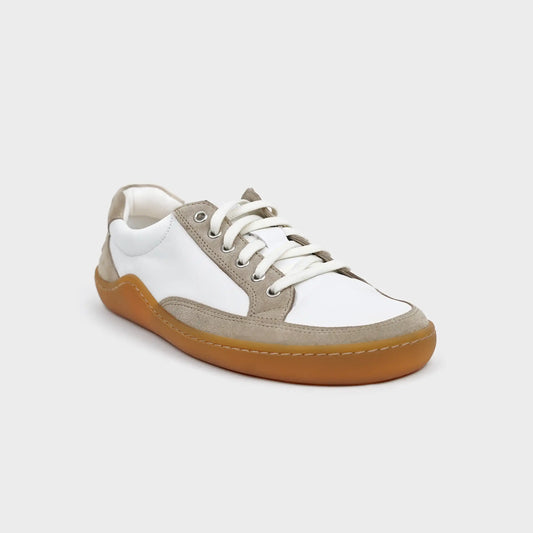
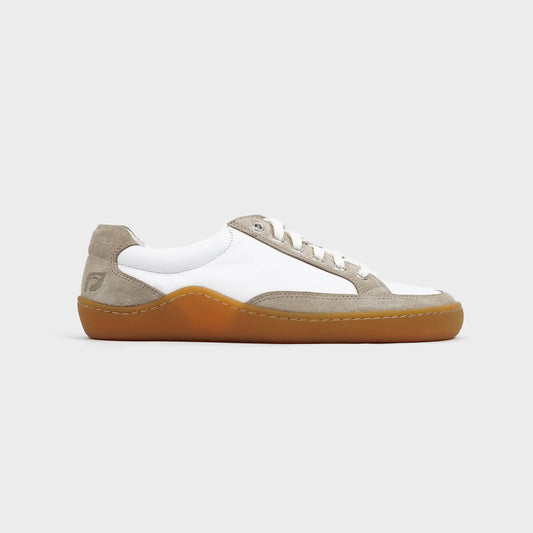
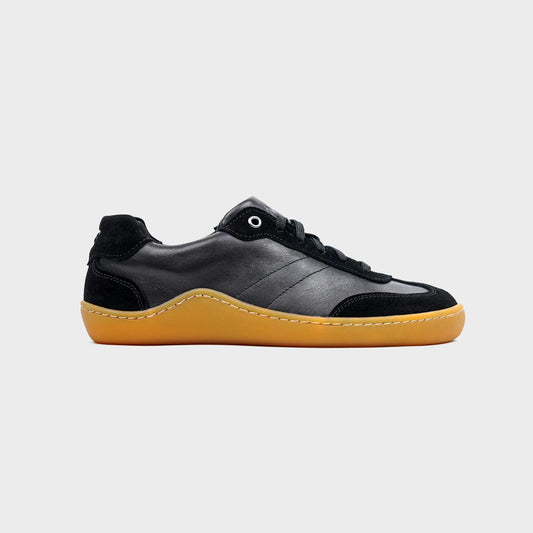
Bareo Pure - 0mm. True zero drop, for barefoot purists and fully adapted feet that want the closest possible experience to walking unshod, without giving up the anatomical shape or podopostural insole that define the rest of the range.
Bareo Evolved - 4mm. A minimal, deliberate drop, still well within the range the biomechanics literature treats as barefoot or extreme-minimalist, built for the transition from conventional footwear, for long hours standing, and for anyone who wants the guidance of a podopostural insole working alongside a sole that eases them in rather than dropping them in at the deep end.
Neither is a lesser version of the other. Pure isn't "more barefoot" than Evolved, and Evolved isn't Pure with training wheels. They're two answers to two different starting points, sharing the same anatomical shape, the same flexible sole philosophy, and the same podopostural insole underneath. Read more about how both fit into the full Evolved Barefoot philosophy.
It's Not Just About the Drop
One of the most common misconceptions, in either direction, is treating drop as if it defines the entire shoe. It doesn't. A properly designed barefoot shoe, 0mm or 4mm, depends on several elements working together:
-
Toe box. Wide enough for the toes, and especially the hallux, to spread and guide movement naturally rather than just having empty space around them.
-
Sole. Flexible enough to let the foot read the terrain, while still holding up to daily wear. Crafted with premium natural materials and Portuguese craftsmanship, the sole and upper work together to allow natural flexion while maintaining structural elegance.
-
Insole. Where the real difference between a passive barefoot shoe and a guided one shows up. A flat, neutral insole leaves the foot alone. A podopostural insole is shaped to support the hallux as it does its job as the guide of the step. Both Pure and Evolved carry it.
-
Proprioception, the constant flow of information from the ground back to the nervous system, is what all of this is really in service of. Good footwear doesn't block those signals or replace them with cushioning. It lets the foot read the ground and, ideally, helps it act on what it reads, whether the sole sits at zero or four millimetres.
Which One Is Right for You?
If your feet have already adapted to barefoot movement, or you're working through a structured transition and want the least amount of shoe possible between you and the ground, Bareo Pure is built for that.
If you're coming from years in conventional footwear, spend long stretches standing or walking during the day, or simply want the barefoot principles without an abrupt adjustment period, Bareo Evolved is the more comfortable starting point, and for many people, the long-term choice.
There isn't a universal answer, and there doesn't need to be one. That's the point of building both into the same system instead of forcing every foot through the same door.
Beyond Ideology
The barefoot movement helped a lot of people rediscover healthier movement, and that's worth real credit. But no category of footwear stays static forever, and refining an idea isn't the same as abandoning it.
That's the space Evolved Barefoot occupies: not a rejection of zero drop, but a system built around it, together with the drop that gets people there without leaving anyone behind on the way.
-
Is zero drop always better?
Not necessarily. Zero drop is a strong, valid choice, and it's exactly what Bareo Pure is built around. But for feet transitioning from conventional footwear or spending long hours standing, a 4mm drop like Bareo Evolved's can be the more comfortable and equally barefoot-aligned option.
-
What's the difference between Bareo Pure and Bareo Evolved?
Bareo Pure uses a true 0mm drop for barefoot purists and fully adapted feet. Bareo Evolved uses a 4mm drop designed for transitioning feet and everyday, long-hours use. Both share the same anatomical shape and podopostural insole.
-
Is a 4mm drop still considered minimalist?
Yes. A 4mm drop sits within the range generally considered barefoot or extreme-minimalist, and remains far closer to barefoot principles than conventional footwear, which typically starts at 8mm or more.
-
Can beginners wear zero drop shoes?
Yes, though some people coming from conventional footwear find a 4mm drop, like Bareo Evolved, a more comfortable starting point depending on their mobility and how their feet have adapted over time.
-
Does a minimal drop reduce natural movement?
Not on its own. Natural movement depends on the complete design of the shoe, toe box, sole flexibility, and insole, rather than the drop measurement in isolation. Bareo Evolved carries the same insole and toe box as Bareo Pure.
Explore Bareo Pure → Explore Bareo Evolved