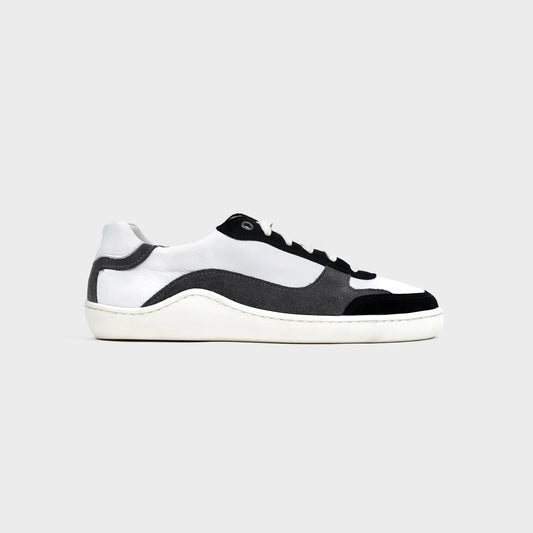

15 benefits of barefoot shoes
From more natural movement to freedom for the toes, these are the most consistent benefits of barefoot shoes, grouped by theme and explained without exaggeration.
Updated: 22 September, 2026

Barefoot shoes don't promise miracles, and any serious content on the topic should start by saying so. What they promise is something simpler and, for a lot of people, just as valuable: letting the foot do the work it was designed for, instead of constantly compensating for the limitations built into decades of conventional footwear.
Here are the most consistent benefits, grouped into four themes: what changes for the foot, what changes in movement, what changes in everyday comfort, and what the Evolved Barefoot approach adds specifically.
Benefits for the foot
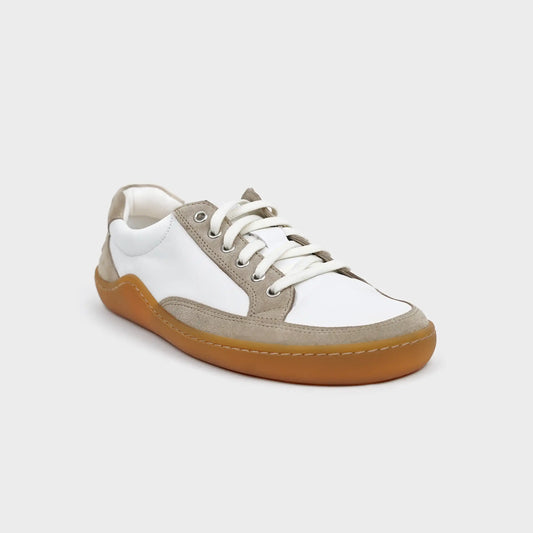
1. More room for the toes to spread. Most conventional footwear progressively narrows toward the toes. A wide toe box lets the toes sit in the position they'd naturally take barefoot, which is the foundation for practically every other benefit on this list.
2. More information about the ground. A thin, flexible sole lets through information about pressure, texture, and incline, which the body continuously uses to adjust balance and posture. This is called proprioception, and it's reduced by thick, heavily cushioned soles.
3. Greater mobility in the joints of the foot. A foot used to rigid footwear tends to move less, simply because the shoe doesn't ask for that movement. A flexible shoe allows the small joints of the foot to keep working through the gait cycle, rather than staying immobilised.
4. Less restriction around the hallux. The hallux needs room to do its job as the guide of the step. A narrow toe box or an upturned tip compresses this area. A wide toe box gives it that freedom back.
Benefits for movement
5. Reduced artificial heel elevation. Conventional footwear raises the heel 8 to 12mm above the toes. Over time, this slightly shortens the Achilles tendon and changes how weight is distributed through the body. Barefoot shoes remove or reduce that elevation.
6. A gait closer to natural. Without an elevated heel pulling the step forward, many people notice a more balanced gait, with weight distributed differently through the foot. This isn't an automatic correction, it's a consequence of removing one of the main artificial interferences of conventional footwear.
7. Better fit for different foot shapes. An anatomical toe box, shaped around the natural form of the foot, tends to accommodate natural variations in width and shape better than the narrow, tapered pattern found in most conventional footwear.
Benefits for everyday comfort
8. Suited to long hours on your feet. For anyone standing all day, whether at work or otherwise, a lightweight, flexible shoe without artificial elevation tends to feel more comfortable by the end of the day than a rigid conventional shoe, though the experience varies from person to person.
9. Lighter materials for everyday wear. Without the heavy cushioning and support structure conventional footwear relies on, barefoot shoes tend to be lighter, which can reduce perceived fatigue over a long day of wear.
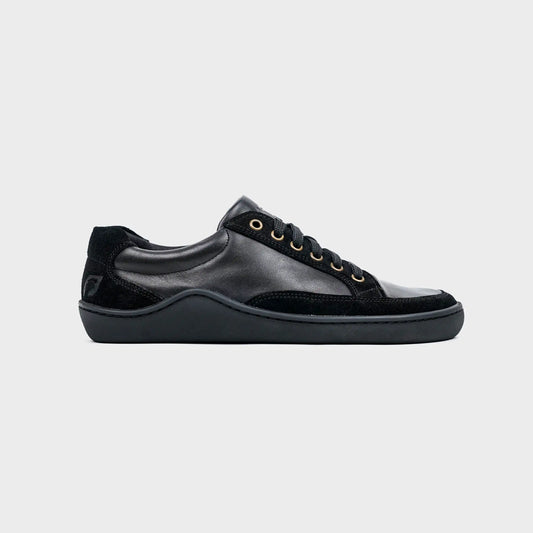
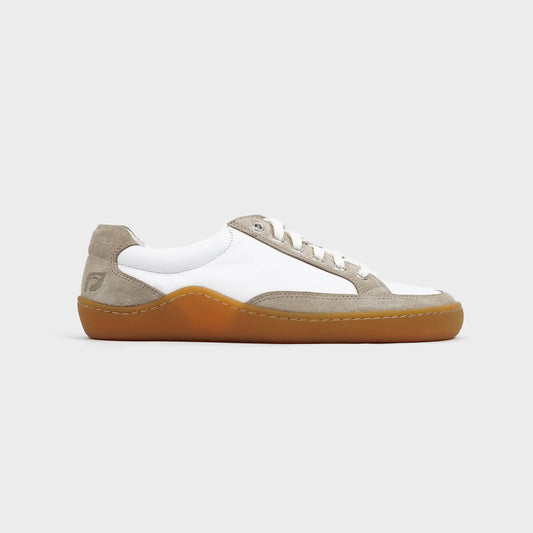
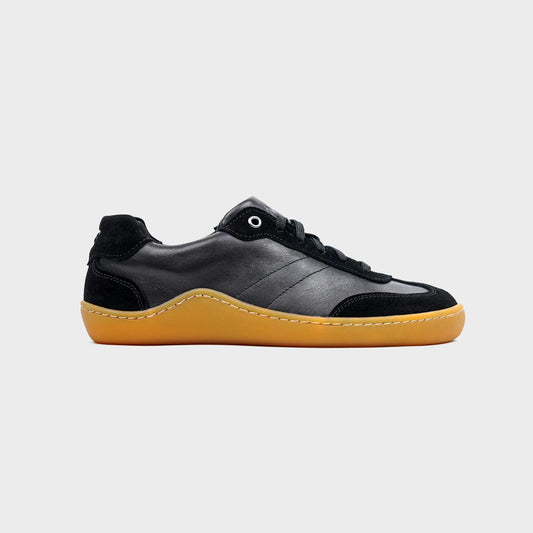
10. Style without compromise. Contrary to the idea that barefoot shoes mean a sporty or casual look, models now exist in leather and suede, with a premium finish, built for more formal contexts without giving up the wide toe box or thin sole.
11. Production with more traceability. Brands with local production, rather than dispersed global supply chains, tend to offer more transparency about material origin and manufacturing process, something increasingly valued by shoppers.
Benefits of the Evolved Barefoot approach
12. Active guidance, not just freedom, with a podopostural insole. Not every barefoot shoe does the same thing once interference is removed. A podopostural insole goes a step beyond freedom and gives the hallux an active reference point to guide the step, rather than leaving the foot entirely on its own.
13. A transition path, not just a radical choice. Contrary to what "pure barefoot" sometimes suggests, there's room between conventional footwear and absolute zero drop. A 4mm micro-drop lets you experience barefoot principles through a more progressive transition, without having to choose between all or nothing.
14. A change process the body understands. Adapting to barefoot shoes follows a known, relatively predictable path, which means you know what to expect at each stage instead of navigating blind. Understanding that timeline helps manage expectations from day one.
15. A philosophy that evolves, not a fixed rule. Barefoot footwear isn't a dogma with one single right answer. There's room for different approaches, zero drop with Bareo Pure or micro-drop with podopostural guidance with Bareo Evolved, depending on what each foot and each person needs.
Are the benefits the same for everyone?
No. The experience varies from person to person, and factors like age, activity level, injury history, previous footwear, and adaptation time all shape how each person responds to barefoot shoes. That's why the transition should be gradual and respect individual pace, rather than treating this as a generic list of benefits that applies the same way to everyone.
These are benefits generally associated with barefoot design, not promises of an individual outcome. If you have questions about your specific situation, especially if a health condition is involved, it's worth talking to a professional before deciding.
Frequently asked questions
-
Do barefoot shoes automatically improve posture?
No. They can create conditions for a more natural gait, but they don't automatically correct movement patterns or replace a professional's assessment where clinical issues exist. -
Do barefoot shoes strengthen the muscles in the foot?
The foot continues using its musculature during daily walking. Over time, this can contribute to more active engagement of the foot's muscles, but results vary between individuals and aren't a substitute for dedicated exercise. -
Do the benefits of barefoot shoes show up in the first few days?
Generally not. Most benefits related to muscle adaptation and mobility develop over weeks of consistent use, not immediately. -
Do I need to choose between zero drop and micro-drop to benefit from barefoot shoes?
No. Both approaches preserve the core barefoot principles, wide toe box, flexible sole, no artificial arch support. The choice depends on each person's starting point, not on which one is "more barefoot."
Discover the Bareo Evolved line → Explore the collection