
Barefoot shoes and plantar fasciitis: what you need to know
Barefoot shoes and plantar fasciitis have a more complex relationship than it seems. Find out what the stage of the condition changes, and when to talk to a professional first.
Updated: 29 September, 2026

If you searched for this, you're probably dealing with heel pain right now, or trying to figure out whether your footwear has anything to do with it. Let's be direct from the start: the relationship between barefoot shoes and plantar fasciitis isn't simple or uniform, it depends heavily on what stage the condition is at, and there's no one answer that fits every case.
This article doesn't replace a professional assessment. What it can do is help you understand the right questions to bring to that assessment.
What plantar fasciitis is, briefly
Plantar fasciitis is inflammation of the plantar fascia, the band of tissue connecting the heel to the toes that supports the arch of the foot. It typically shows up as heel pain, often most intense during the first steps in the morning or after long periods without load. Causes are varied, repetitive overload, excessive tension on the fascia, individual biomechanical factors, and often a combination of several factors at once rather than a single isolated culprit.
Why the answer isn't simple
Two ideas circulate about barefoot shoes and plantar fasciitis, and both hold some truth depending on context.
The first idea: conventional footwear with significant cushioning and arch support eases the fascia by absorbing impact and reducing direct load. For someone in an acute flare-up of intense pain, this can make sense temporarily.
The second idea: over the long term, a foot that constantly relies on artificial support may develop less inherent strength in the muscles that support the arch, and a shoe that allows more natural muscle work may, with careful adaptation, contribute to a more resilient base.
Neither idea is simply right or wrong. The difference lies in the stage of the condition and the pace of introduction, not in the shoe itself.
Acute phase: not the time to introduce barefoot shoes
During an acute flare-up of intense pain, the priority is usually reducing load on the affected area, not increasing the sensory input and muscular demand that barefoot shoes introduce. Introducing barefoot shoes at this stage, without professional guidance, may not be the right call. This was already noted in our article on who should take extra care before wearing barefoot shoes, and acute plantar fasciitis remains one of the clearest cases on that list.
After the acute phase: a conversation to have with a professional
Many people are eventually able to transition to footwear with less artificial support, including barefoot shoes, once the acute phase has resolved and with proper guidance. But that decision, about whether, when, and how to make that transition, should come from whoever is overseeing your recovery, not from a generic blog article. Every case of plantar fasciitis has its own origin and context, and what works for one person may not suit another.
What not to do
Don't assume barefoot shoes will "cure" plantar fasciitis. No shoe treats an inflammatory condition on its own. Any content promising that isn't being honest with you.
Don't attempt the transition on your own during an active pain flare-up. Even with good intentions, introducing more stimulus to an already inflamed fascia can delay recovery rather than help it.
Don't ignore pain that worsens with use, whatever footwear you're wearing. That's always a sign to reassess with a professional, regardless of what's on your feet.
If and when the acute phase passes
Assuming professional guidance supports the transition, the same principles as any gradual barefoot shoe adaptationapply, only with even more caution than usual. That typically means starting with very little wear time, paying extra attention to any sign of worsening, and progressing only with validation from whoever is overseeing your recovery at each stage.
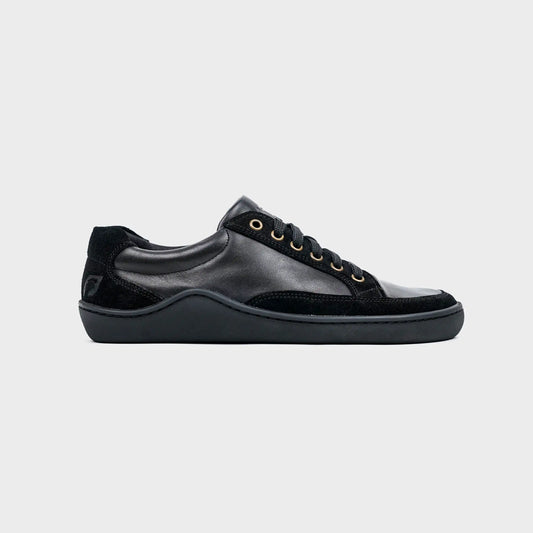
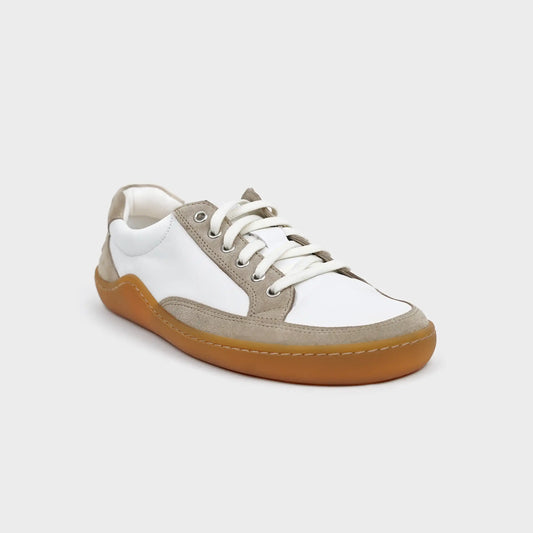
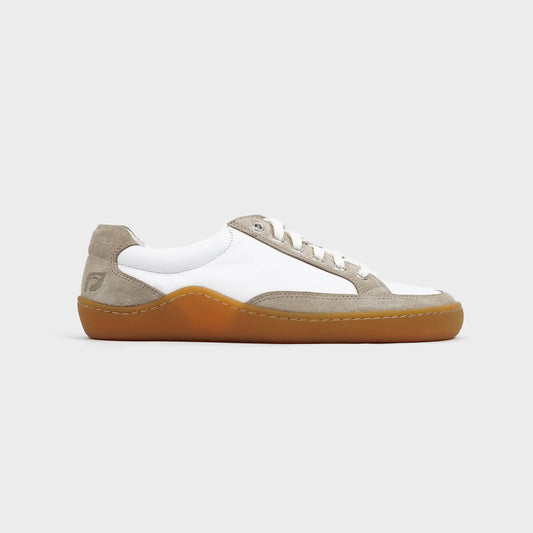
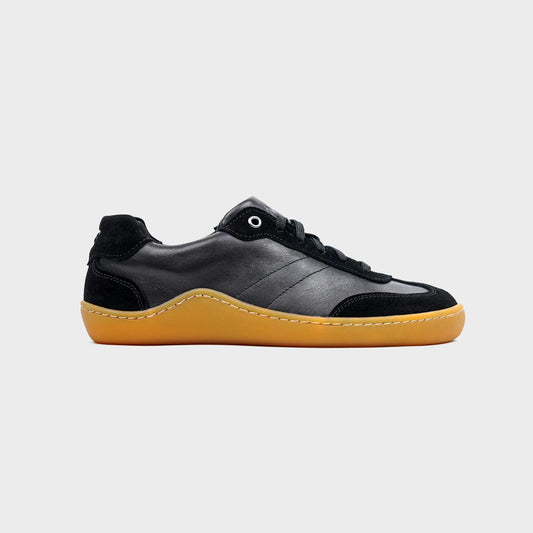
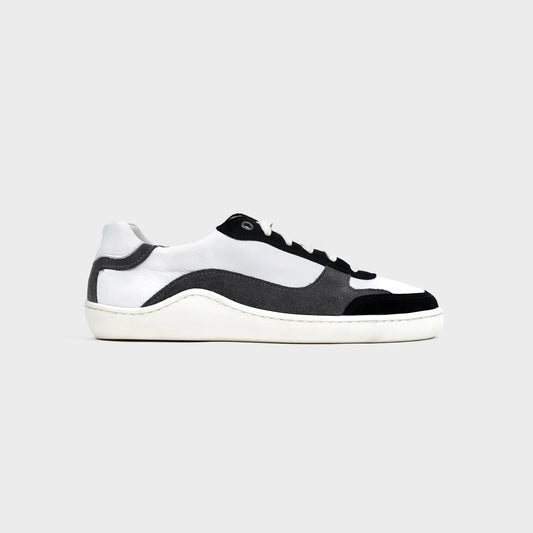
A 4mm micro-drop, like the one on the Bareo Evolved line, is sometimes referenced as a more gradual transition than jumping straight to zero drop, but this doesn't replace specific clinical guidance for your case, it's just general information about the options available.
Frequently asked questions about plantar fasciitis
-
Do barefoot shoes cure plantar fasciitis?
No. No shoe, on its own, treats an inflammatory condition. Any footwear decision during a plantar fasciitis episode should be made with professional guidance. -
Can I wear barefoot shoes with plantar fasciitis during an acute flare-up?
Generally not recommended without professional oversight. The priority during this phase is usually reducing load on the fascia, not introducing more stimulus. -
Once the pain has resolved, can I go back to barefoot shoes?
Many people can, with professional guidance and a careful, gradual transition. There's no universal answer, it depends on the specific origin and context of each case. -
What kind of professional should I see?
A podiatrist, physiotherapist, or doctor experienced in foot conditions is generally the right starting point to assess your specific situation.
Explore the Bareo Evolved line when you're ready to transition → Explore the collection